Cardiovascular, Muscle & Metabolism Science Seminar: February 9, 2026
A partnership with Dalton Cardiovascular Research Center.
________________________________________________
"Fat-Muscle Signaling: The Good, The Bad and The Beige"
 |
Speaker: Date: Monday, February 9, 2026, 12:00 p.m. - 1:00 p.m. Location:
|
 Register Here
*Zoom option available
Description
Adipose accumulation in and around muscles is a pervasive feature of muscle pathology. It has been extensively documented in people with hereditary myopathies, orthopedic injuries and metabolic dysregulation, where, across disorders, it is associated with reduced muscle strength and poor rehabilitation outcomes. However, the mechanism for this association remains undefined and at present there exist no effective therapies to reduce fat accumulation once it has developed. This presentation will discuss our recent advances in measuring, modeling and manipulating fat accumulation in muscle injury and disease. Our work supports a direct link between fat accumulation and muscle contractile deficits that we hypothesize to be mediated by paracrine secreted adipokines. In-vivo, the secreted adipokine profile is neither uniform nor static, but varies with fat phenotype and environmental stimuli. Some muscle-associated fat exhibits features of beige fat, a phenotype with high plasticity. Our work explores the potential for novel phenotype-directed therapies to modify the secreted adipokine profile and remodel fat-muscle signaling to promote muscle growth and functional recovery.
About the Speaker
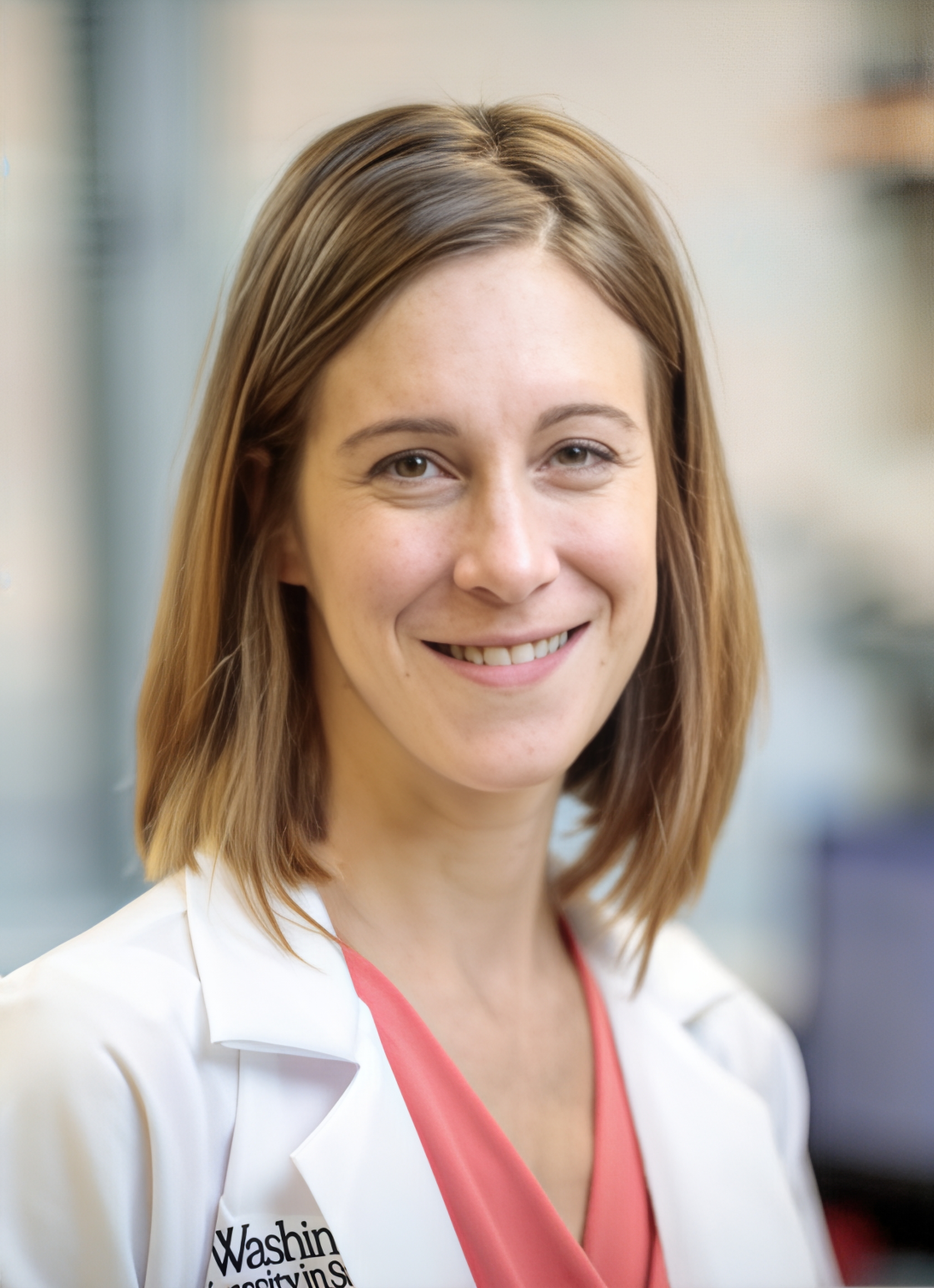
Dr. Gretchen Meyers obtained her B.S. and Ph.D. from Washington University in 2004. Her research focuses on understanding how changes at the molecular and cellular level in skeletal muscle affect muscle structure and function, and, in turn, how pathological changes in muscle loading and use affect cellular processes. She currently pursues two main research projects: one looking at the progressive changes to the rotator cuff following a tear and another investigating the drivers and consequences of the development of intramuscular (extra-fibrillar) fat.
Professionally, she is an active member of the Biomedical Engineering Society (BMES), the American Society for Cell Biology (ASCB), the Orthopedic Research Society (ORS), the American Society of Mechanical Engineers (ASME), and the American Society of Biomechanics (ASB). The Meyer lab also makes mentorship a priority, guiding each lab member through their training with an individualized approach. She fosters an inclusive environment, valuing each member's background and perspective, believing that diversity strengthens both the science and the community.
About the Seminar Series
The goal of the NextGen Cardiovascular, Muscle & Metabolism Science Seminar is to highlight transdisciplinary precision research taking place in cardiovascular, muscle and metabolism fields; provide opportunities for collaboration among researchers to build their own research efforts; and promote clinical/researcher activity across the University of Missouri System and our partners.
For questions about this event, please reach out to Mackenzie Lynch.
 |  |