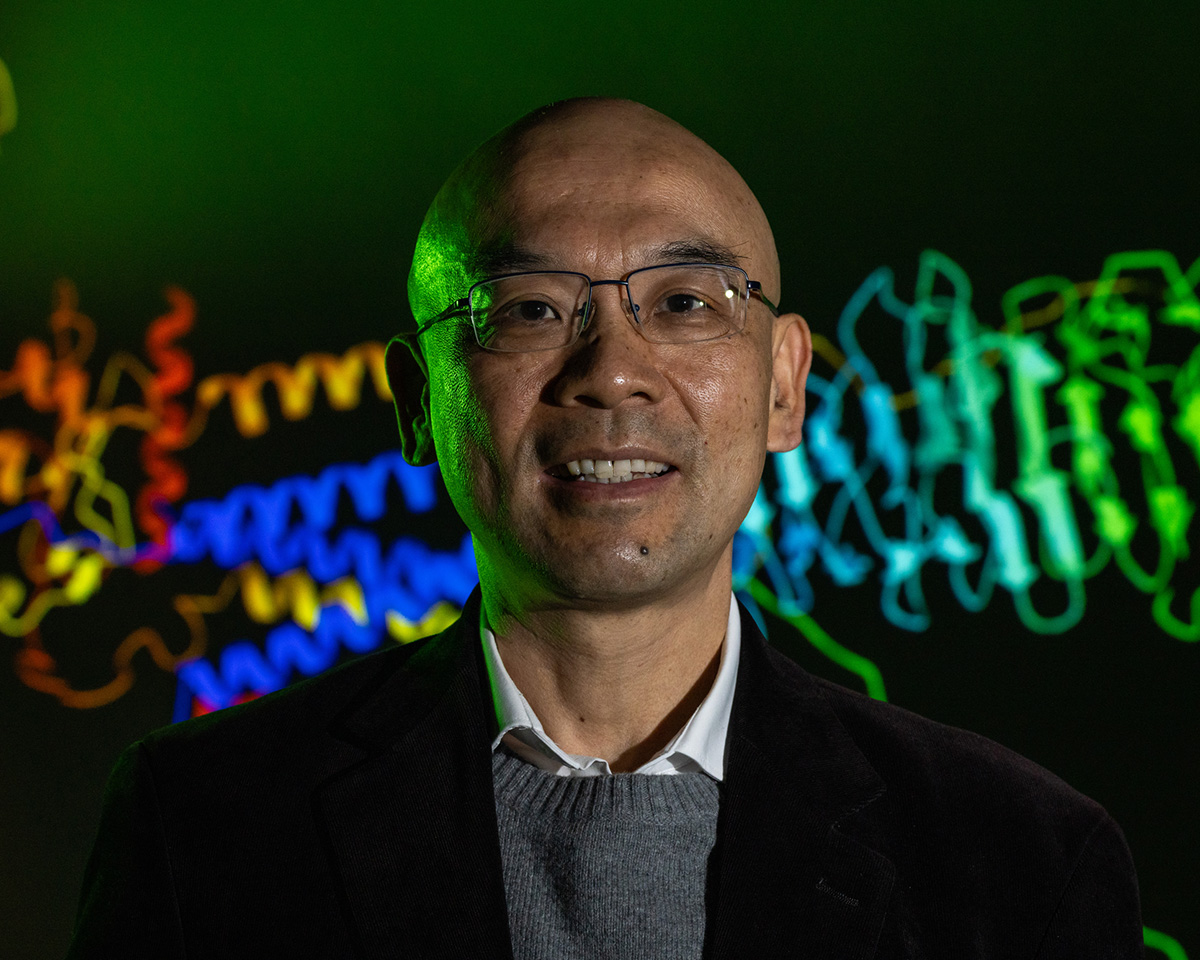
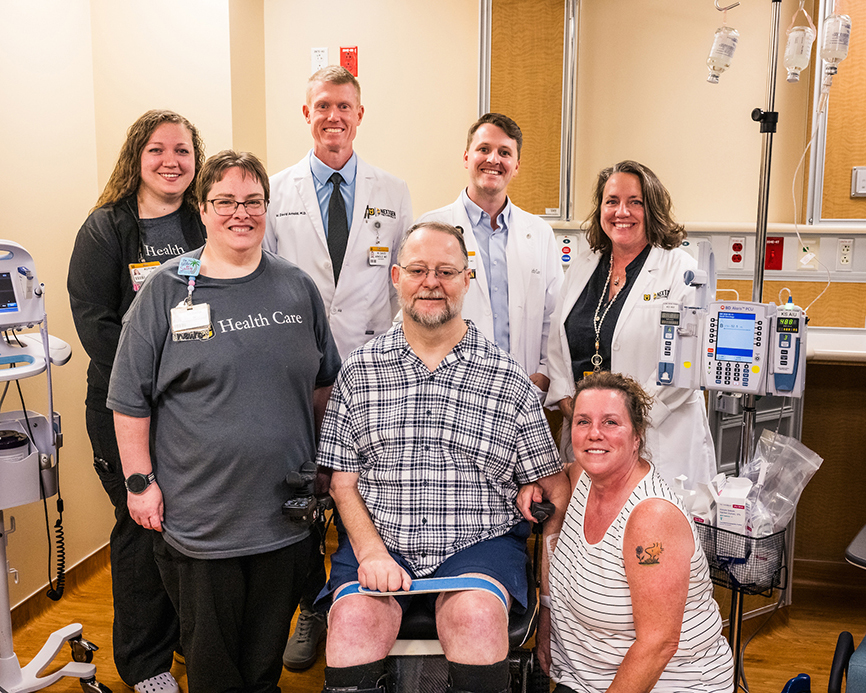
Breadcrumb Home News Electron Microscopy Yields Breakthrough Clue to Help Soybeans Fight a Billion-Dollar Pest Mizzou researchers study plant resistance to the worms that cause $1 billion in annual losses to U.S. soybean industry. Researcher Earns NIH Grants to Study Embryo Development Infertility is a common struggle, affecting about 1 in 5 U.S. women, but it can still be a deeply isolating and painful journey. Saunders and Wang receive AHA Career Development Awards Researchers from Mizzou's College of Veterinary Medicine have been recognized with the American Heart Association Career Development Award. Retraining the Immune System to Treat Type 1 Diabetes A recent study shows a potential way to protect the transplant without using immunosuppressive drugs. Featured by Springer Nature: The Protein at the Heart of Heart Disease Researchers describe how predicting the shape of ApoB for the first time opened up new possibilities for understanding how heart disease works at an atomic level. Featured in the New York Times: 5 Health Risks From Consuming Too Much Protein Most Americans eat more protein than they need. We asked experts what can happen if people have too much of a good thing. Blood Pressure Drug Can Reduce Arterial Stiffening Obesity is closely intertwined with high blood pressure and diabetes, often putting patients at greater risk for either of these health conditions. New Grant Supports Study of Cardiac Deterioration Cardiovascular-kidney-metabolic (CKM) syndrome is a newly recognized disorder, first defined in 2023 by the American Heart Association, that is systemic, progressive and often fatal. Mizzou’s Bench-to-Bedside Efforts Support a New Drug for a Neuromuscular Disorder with No Cure The drug, ignaseclant, helped people with Charcot-Marie-Tooth disease in a clinical trial at Mizzou’s NextGen Precision Health building. Researcher Earns $3.4 Million to Study Gut and Brain Health Scientists are increasingly discovering that the health of your gut, also known as the gastrointestinal (GI) tract, may be closely connected with the health of your brain. Niclosamide Loaded Nanoparticles that Help Overcome Therapeutic Resistance in Pancreatic Cancer Researchers at the University of Missouri have tested a promising new treatment approach for pancreatic cancer. Photo gallery: 2026 Undergraduate Research Day at the Capitol Hunter Hollomon, a junior studying biochemistry in the College of Agriculture, Food and Natural Resources, is researching the impact of high-protein diets on heart health. Researcher Earns $2.8 Million to Study Infant Kidney Injury Babies in the neonatal intensive care unit (NICU) are more likely to have kidney problems, and premature infants particularly are at a higher risk for acute kidney injury (AKI). Mizzou Researcher Applies Novel Delivery Method to Treat ALS Symptoms New therapy bypasses the blood-brain barrier to successfully deliver a neuroprotective molecule. Mizzou Researchers Crack the Code of Protein Geometry Tech company NVIDIA powered the development of an AI tool that will enable scientists to efficiently design bespoke proteins for pharmaceuticals and materials. $3.4 Million Grant to Fund Study of Common Birth Defect Hypospadias is the second most common birth defect in males – affecting about 1% of boys in the world – and is characterized by an abnormality where the urethra does not exit normally. Making AI-Based Scientific Predictions More Trustworthy University of Missouri researchers have developed a free-to-use software tool to verify the accuracy of artificial intelligence-based protein structure predictions. Mizzou Researchers Track Gut Microbiome’s Repopulation After Colonoscopy The procedure’s preparation provides a clean slate to study diet’s effect on gut health. Neuron Hyperactivity Linked to High Blood Pressure Researchers at the University of Missouri School of Medicine may have found a link between high blood pressure and an overactive nervous system. University of Missouri Conducts First In-Person Clinical Trial for Nuclear Medicine Breakthrough Device The clinical trial marks the latest human trial at Mizzou involving radioisotopes to treat cancer. Pagination Page 1 Next page ››