Cardiovascular, Muscle & Metabolism Science Seminar: May 11, 2026
A partnership with Dalton Cardiovascular Research Center.
________________________________________________
"Multimodal Cortical Signatures for Early Detection of Alzheimer’s Disease and Related Dementias"
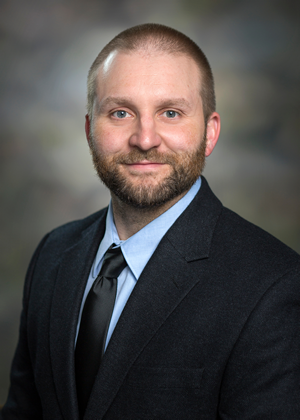 |
Speaker: Date: Monday, May 15, 2026, 12:00 p.m. - 1:00 p.m. Location:
|
 Register Here
*Zoom option available
Description
Alzheimer’s Disease and Related Dementias (AD/RDs) are devastating health afflictions and there is a need to better understand and detect these disease processes. This project tests whether multimodal feature sets (i.e. "signatures") of cortical (and subcortical) organization can provide early diagnostic indicators of familial AD/RDs using noninvasive magnetic resonance imaging (MRI) and brain stimulation-based measures. The goal of this work is to contribute integrated, non-invasive, and scalable diagnostic tools capable of early AD/RDs detection that bridge the gap between dysfunction-specific testing and disease mechanism-specific testing. AD/RDs often have shared cardiovascular and metabolic etiologies. This project seeks to expand into additional models of these AD/RD sub-types.
About the Speaker
Dr. Jeffery Boychuk earned his BSc from the University of Lethbridge, Alberta, Canada, and his PhD from the University of Florida, Gainesville, FL, followed by postdoctoral fellowships at the University of Calgary and the University of Kentucky. His research program is centrally focused on uncovering the functional mechanisms that drive cortical circuit repair and reorganization following significant brain insults, such as stroke, seizures, and neurodegeneration. He utilizes a comprehensive approach that involves multi-month tracking of both behavioral and cellular recovery, concentrating on two primary systems: the neocortical output for somatic motor control, particularly emphasizing recovery from stroke injury and neurodegeneration, and the regulation of hippocampal excitability by the dentate gyrus during recovery from Traumatic Brain Injury (TBI) and Post-Traumatic Epilepsy. His lab employs advanced techniques, including whole-cell patch clamp recordings, cortical EEG/muscle EMG, and molecular methods, to evaluate pharmacological, neuromodulatory, and rehabilitative therapies with the ultimate goal of identifying and targeting cell mechanisms to maximize functional recovery of damaged or spared neural tissue.
About the Seminar Series
The goal of the NextGen Cardiovascular, Muscle & Metabolism Science Seminar is to highlight transdisciplinary precision research taking place in cardiovascular, muscle and metabolism fields; provide opportunities for collaboration among researchers to build their own research efforts; and promote clinical/researcher activity across the University of Missouri System and our partners.
For questions about this event, please reach out to Mackenzie Lynch.