Neuroscience Seminar: July 20, 2026
partnership with the Interdisciplinary Neuroscience Program.
________________________________________________
"In Vivo Glia Reprogramming For Neural Repair"Presented by: Date: July 20, 2026, 4:00-5:00 p.m. Location: Roy Blunt NextGen Precision Health Building To be added to the monthly calendar event, email Smita Saxena. |
 Register Here
*Zoom option available
Speaker
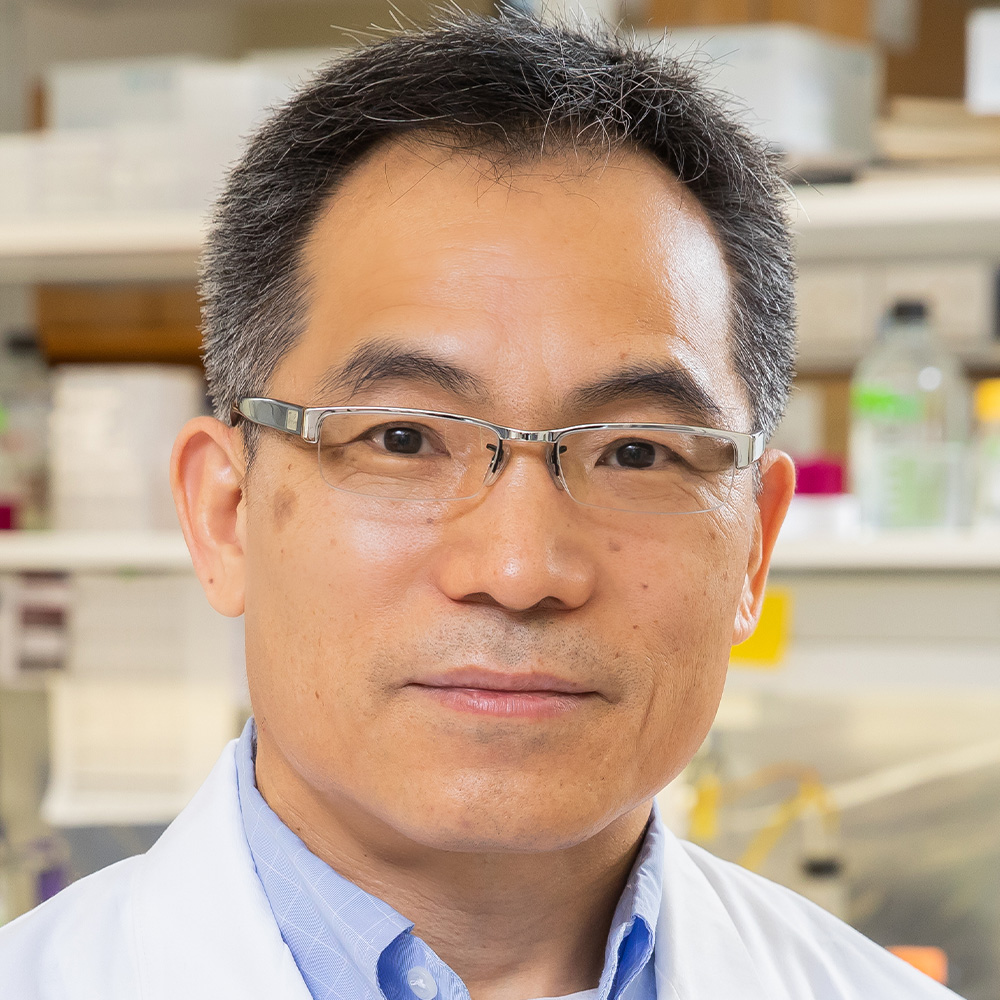 Dr. Chun-Li Zhang received his Ph.D. in Genetics and Development from UT Southwestern, where he studied under the mentorship of Dr. Eric Olson on transcriptional control of muscle development and heart disease. Upon graduation in 2003, he conducted postdoctoral research as a HHMI Fellow of the Life Sciences Research Foundation in Dr. Ronald Evans’ laboratory at the Salk Institute, California. In collaboration with Dr. Fred Gage at the Salk, Dr. Zhang worked on adult neural stem cells and neurogenesis. He joined the faculty as Assistant Professor in 2008 and was promoted to Associate Professor with tenure in 2014 and Professor in 2018.
The major focus of his laboratory is on molecular and cellular mechanisms controlling adult neural stem cells, neurogenesis, regeneration of the nervous system, and cellular reprogramming for disease modeling and drug identification. Their discoveries were extensively reported by the news media, such as reprogramming in the adult brain (The Scientist Magazine, Nature Reviews Neuroscience, etc.), DLX2's potential to mend the brain (The Scientist), astrocyte reprogramming in the adult spinal cord (The Scientist Magazine, Neurology Today, Medical Daily, Breitbart News Network, The Daily Texan, etc.), reprogramming NG2 glia for regeneration and recovery after spinal cord injury (Fiercebiotech, Eurekalert, etc.), modeling human amyotrophic lateral sclerosis (ALS) with adult-converted spinal motor neurons (MDLinx, Alzforum, The ALS Forum, Science Mission, ALS News Today, etc.), new findings on traumatic brain injury (Science Daily, News Medical, MD Magazine, etc.), and in vivo reprogramming of mature neurons (Discover Magazine, Science Magazine, Fierce Biotech, Genetic Engineering & Biotechnology News, Science Daily, EurekAlert, etc.). Their work on cell fate reprogramming in vivo was recognized as one of 2014's Big Advances in Science by The Scientist Magazine.
Description of Seminar
Glial cells are abundant in the central nervous system and play dynamic roles in responses to neural injury and neurodegenerative disease. Research in the Zhang laboratory focuses on developing strategies to harness and reprogram glial cells for neural repair. In this seminar, I will first present our progress in reprogramming glial cells to generate new neurons in vivo, highlighting its potential applications in regenerative medicine. In the second part of the talk, I will discuss our recent efforts to reprogram pathological glial states to promote neural protection, with a particular focus on Alzheimer’s disease.
 |  |