Reproduction Science Seminar: May 6, 2026
A partnership with the Interdisciplinary Reproduction and Health Group.
________________________________________________
"Signaling Pathways Important for Formation of the Ovarian Reserve"
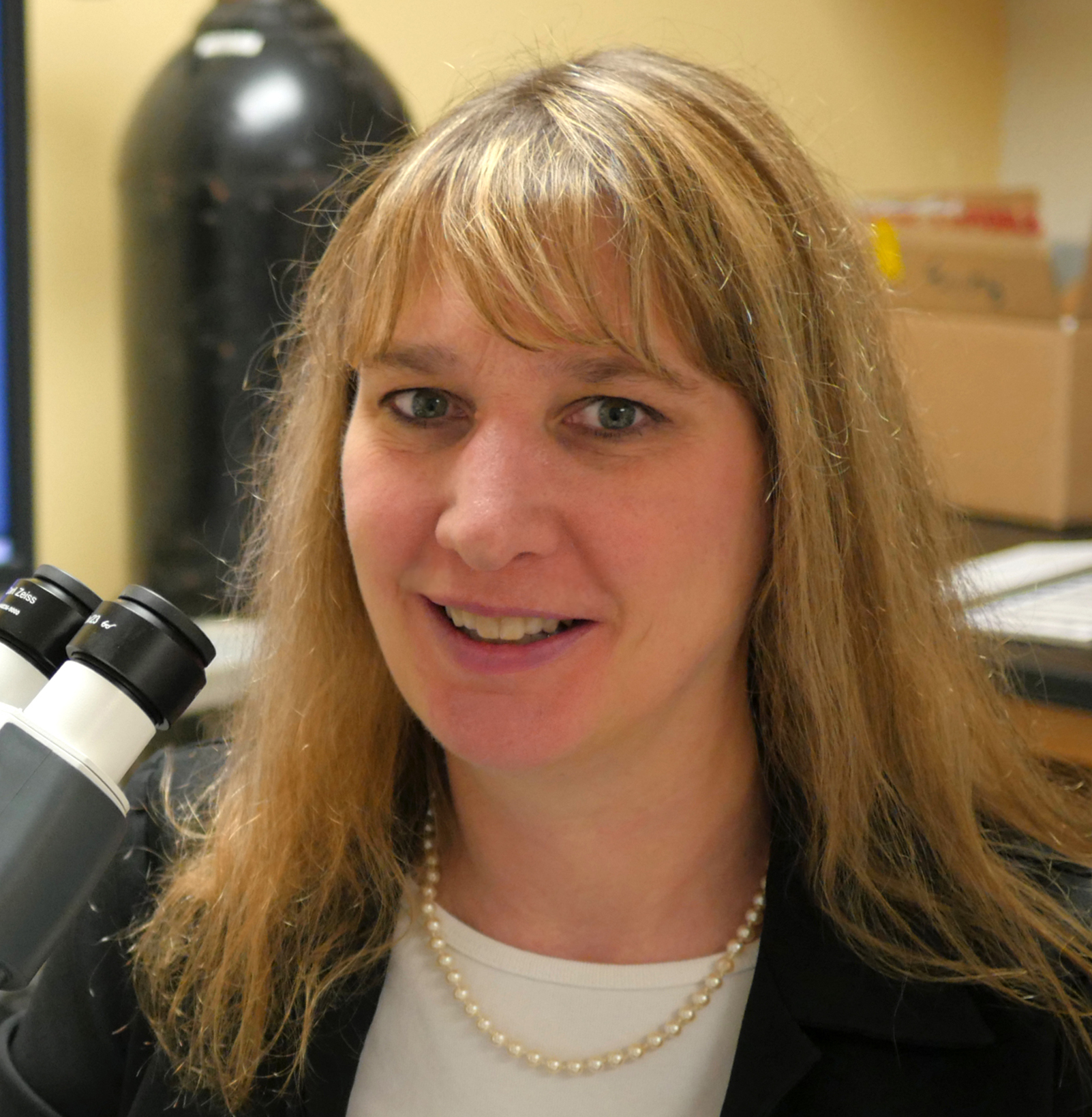 | Speaker: Date: Wednesday, May 6, 2026, 4-5 p.m. Location: Hosted by: |
In-person and virtual options. All are welcome!
 Join the Meeting
Description
Primary ovarian insufficiency (POI) is a reproductive disorder where a woman's ovaries stop functioning before the age of 40 and affects 1 in 100 women. Causes of POI and other female reproductive diseases are not well understood but may involve depletion or dysfunction of the ovarian reserve. The pool of primordial follicles in mammals makes up the ovarian reserve and is established by the time of birth. Primordial germ cells, the oocyte precursors, begin to differentiate into oocytes during embryonic development. These cells migrate to the genital ridge and divide by mitosis, remaining connected, through incomplete cytokinesis, in clusters of synchronously dividing cells known as germ cell cysts. Oocytes progress through meiotic prophase I and arrest at the diplotene stage. Oocyte clusters begin to break apart, allowing each oocyte to become surrounded by a layer of granulosa cells, forming primordial follicles. A loss of approximately two thirds of oocytes is coincident with cyst breakdown and is believed to be important in primordial follicle formation. However, mechanisms regulating cyst breakdown, oocyte numbers and primordial follicle assembly are not well understood. This talk will focus on several signaling pathways that regulate formation of primordial follicles including signaling by steroid hormones and receptor tyrosine kinases. Data from ovary organ culture studies will be presented showing that estradiol and a variety estrogen mimicking compounds block primordial follicle formation and will explore potential signaling mechanisms. Evidence that signaling through the receptor tyrosine kinase, KIT, promotes follicle formation and associated oocyte loss in organ culture will also be shown along with potential pathways downstream of KIT. Understanding molecular and cellular mechanisms regulating primordial follicle formation will contribute to development of interventions for infertility, cancer and other human disorders.
About the Speaker
Dr. Pepling is a Professor in Biology at Syracuse University. She received a B.S. (1985) in Biology from Cornell University, a M.S. (1988) in Biology from Adelphi University, and a Ph.D.(1995) in Genetics from the State University of New York at Stony Brook. Following post-doctoral training at the Carnegie Institution of Washington Department of Embryology (1995-2002), Dr. Pepling accepted an Assistant Professor position at Syracuse University in 2002, was promoted to Associate Professor in 2008, and Full Professor in 2016. Her research focuses on signaling pathways including hormonal cues involved in establishing the ovarian reserve using mouse as a model system. Her work has been funded by grants from the National Institutes of Health and the National Science Foundation. Dr. Pepling currently serves as the Chair of Biology at Syracuse University.
About the IRHG Seminar Series
The goal of the Interdisciplinary Reproduction & Health Group (IRHG) Seminar Series is to highlight transdisciplinary precision research taking place in the reproductive health field, provide opportunities for collaboration among researchers to build their own research efforts and promote clinical/researcher activity across the University of Missouri System and our partners.
The IRHG was organized and established through a faculty-driven, grass roots effort in 2016 to develop an integrative interdisciplinary program that transcends traditional departmental, college and system boundaries to foster excellence in reproduction, health research and education at Mizzou.
View all upcoming Reproductive Health events on the IRHG Seminar Series website.
For questions about this event, please reach out to Wipawee Winuthayanon.
 |  |