Reproductive Health Science Work-In-Progress: November 18, 2026
A partnership with the Interdisciplinary Reproduction and Health Group.
________________________________________________
Reproduction Health Work-In-Progress Seminar
Date: Wednesday, November 18, 2026, 4-5 p.m.
Location:
Roy Blunt NextGen Precision Health Building
Atkins Family Seminar Room
Hosted by:
Ciro Amato, PhD
 In person only
"A Novel Clitoral Cell Population Directs Urethral-Vaginal Separation"
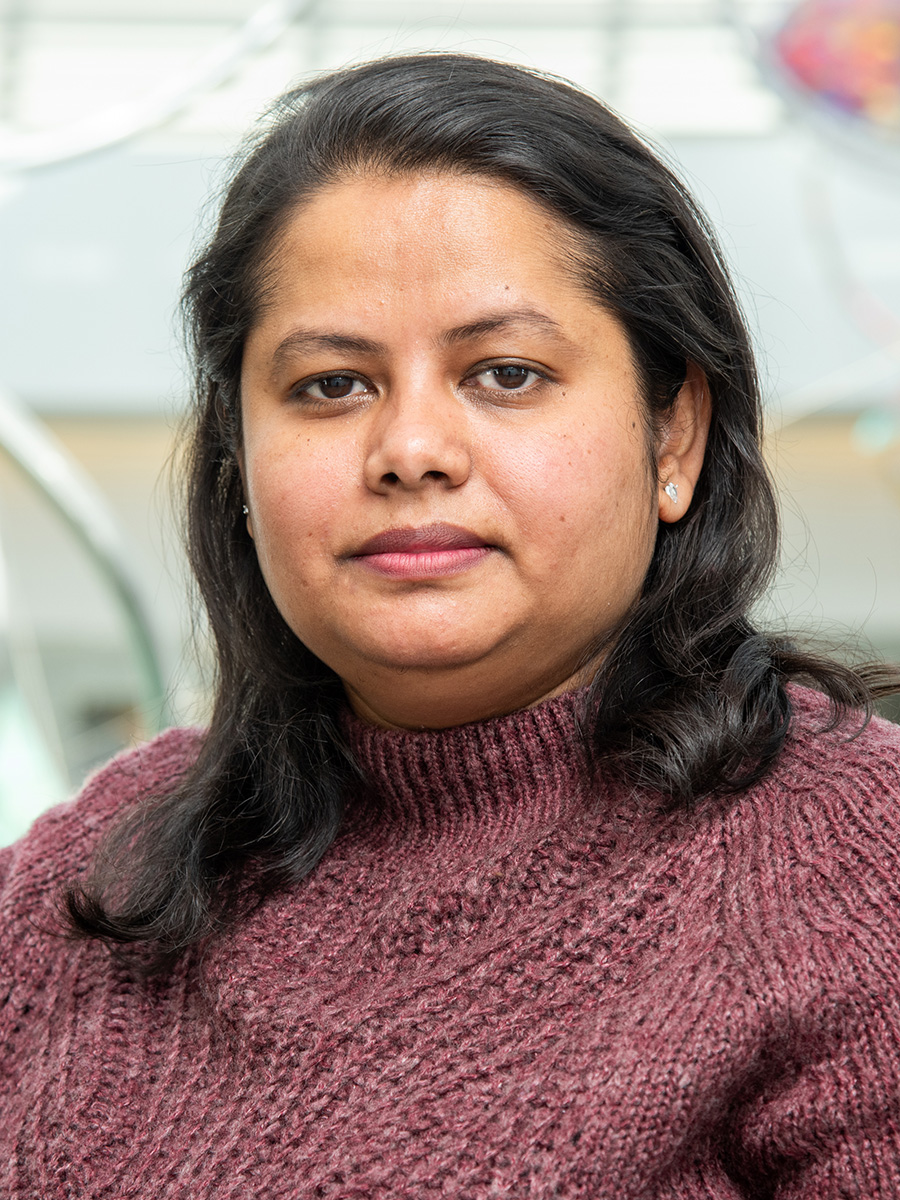 | Speaker: Mentor: Ciro Amato, PhD |
Description
My research focuses on understanding the cellular and molecular mechanism underlying female urethral development and uro-vaginal separation. I'm investigating the role of a novel clitoral cell population in regulating urovaginal separation. Using lineage tracing , cell ablation , and single cell RNA sequencing , I aim to determine how these cells contribute to normal urogenital development and how disruption of those cells may lead to congenital anomalies such as female hypospadias.
________________________________________________
"Oviductal Assembloids: An In Vitro Model to Study the Pre-Implantation Embryo Environment"
 | Speaker: Mentor: Wipawee “Joy” Winuthayanon, PhD |
Description
Instances of infertility are increasing globally, and assisted reproductive technologies (ARTs) are used to combat this. While most babies conceived via ARTs, like in vitro fertilization (IVF), are healthy, ART-derived singletons have higher rates of adverse perinatal outcomes and epigenetic modifications related to imprinting disorders compared to those naturally conceived. This indicates a need for optimizing the current culture conditions employed in the in vitro production of embryos. The oviduct (Fallopian tube) is the site of fertilization and pre-implantation embryo development. During ARTs, like IVF, the oviduct is completely bypassed and in culture, embryos often take longer to develop to blastocyst stage than in vivo. We utilize apical-out oviduct assembloids consisting of ciliated and secretory epithelial cells on the exterior and stromal cells inside the structures, which may be necessary for establishing a microenvironment conducive to optimal embryo development. By co-culturing mouse oviductal assembloids with 1-cell embryos we demonstrate that development to blastocyst stage occurs at the same rate as in vivo development, and more quickly than standard in vitro embryo culture.
About the IRHG Seminar Series
The goal of the Interdisciplinary Reproduction & Health Group (IRHG) Seminar Series is to highlight transdisciplinary precision research taking place in the reproductive health field, provide opportunities for collaboration among researchers to build their own research efforts and promote clinical/researcher activity across the University of Missouri System and our partners.
The IRHG was organized and established through a faculty-driven, grass roots effort in 2016 to develop an integrative interdisciplinary program that transcends traditional departmental, college and system boundaries to foster excellence in reproduction, health research and education at Mizzou.
View all upcoming Reproductive Health events on the IRHG Seminar Series website.
For questions about this event, please reach out to Ciro Amato and the NextGen Engagement team.
 |  |