By Harper Snyder | March 20, 2026
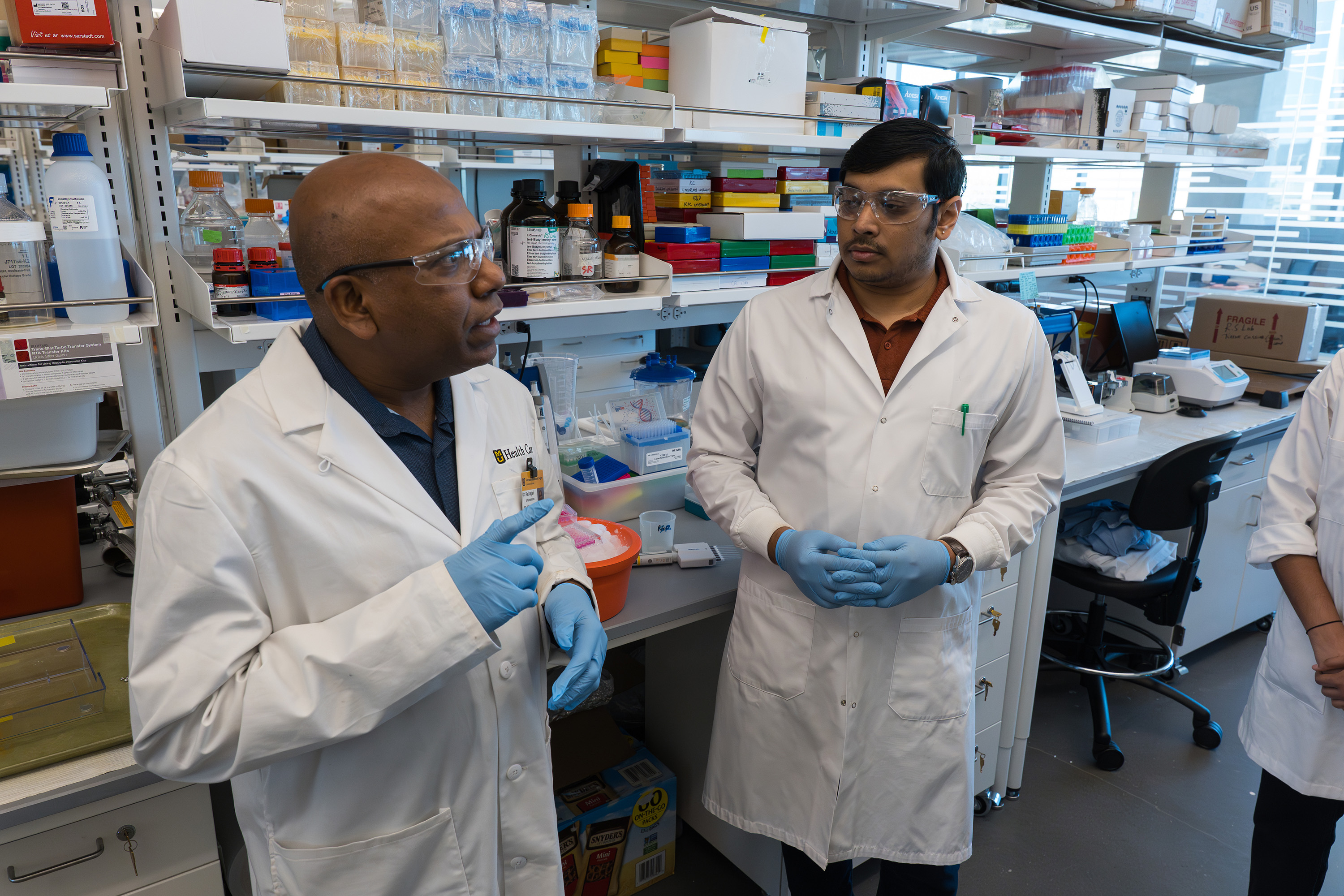
Researchers at the University of Missouri have tested a promising new treatment approach for pancreatic cancer. In a recent study, Satyanarayana Rachagani, an associate professor of Veterinary Medicine and Surgery in the College of Veterinary Medicine, and his team investigated the molecular drivers of pancreatic cancer and targeted a key protein that is involved in resistance to treatment.
This protein, hypoxia-inducible factor-1 alpha (HIF-1α), accumulates in pancreatic cancer cells and helps them adapt to the low-oxygen environment inside tumors. These adaptations allow the cancer cells to survive under harsh conditions, ultimately making them far more difficult to kill.
Patients diagnosed with pancreatic cancer have just a 13 percent chance of surviving the next five years. The disease is difficult to detect early, spreads rapidly to surrounding tissues, and is notoriously resistant to current treatments.
Previous studies have shown that niclosamide, a drug originally developed to treat tapeworm infections, has potential therapeutic applications in several types of cancer. Niclosamide lowers levels of HIF-1α in pancreatic cancer cells, increasing their vulnerability to chemotherapy and inhibiting tumor growth. However, its use is limited by low bioavailability, meaning that very little of the drug is absorbed into the bloodstream, and even less reaches target tissues.
To overcome this limitation, Rachagani’s team turned to nanotechnology. By encapsulating niclosamide in biodegradable nanoparticles, the researchers aimed to improve how the drug is absorbed, distributed, and delivered to tumor cells. Measuring less than one-billionth of a meter, these particles protect niclosamide as it circulates in the bloodstream and gradually releases it once inside the tumor tissue. By improving solubility and stability, nanoparticle delivery allows niclosamide to overcome the absorption barriers that previously limited its therapeutic potential.
Using both cellular and animal models for pancreatic cancer, the Rachagani lab found that niclosamide-loaded nanoparticles significantly disrupted cancer cell metabolism, particularly pathways linked to mitochondrial function. This disrupting weakened the stability of HIF-1α, undermining the cancer cells’ ability to survive in low-oxygen conditions, and making them far more vulnerable to chemotherapy treatment.
“Niclosamide nanoparticles enhance pancreatic cancer sensitivity to gemcitabine via HIF-1α inhibition” was published in iScience. Mizzou postdoctoral fellow Nagabhishek Sirpu Natesh is a co-author of the study.
Read more about Dr. Rachagani's work at NextGen Precision Health here.